

Valerie Powell Stafford, FACHE, Shares Insights on Supporting Healthcare Teams Through the Workday
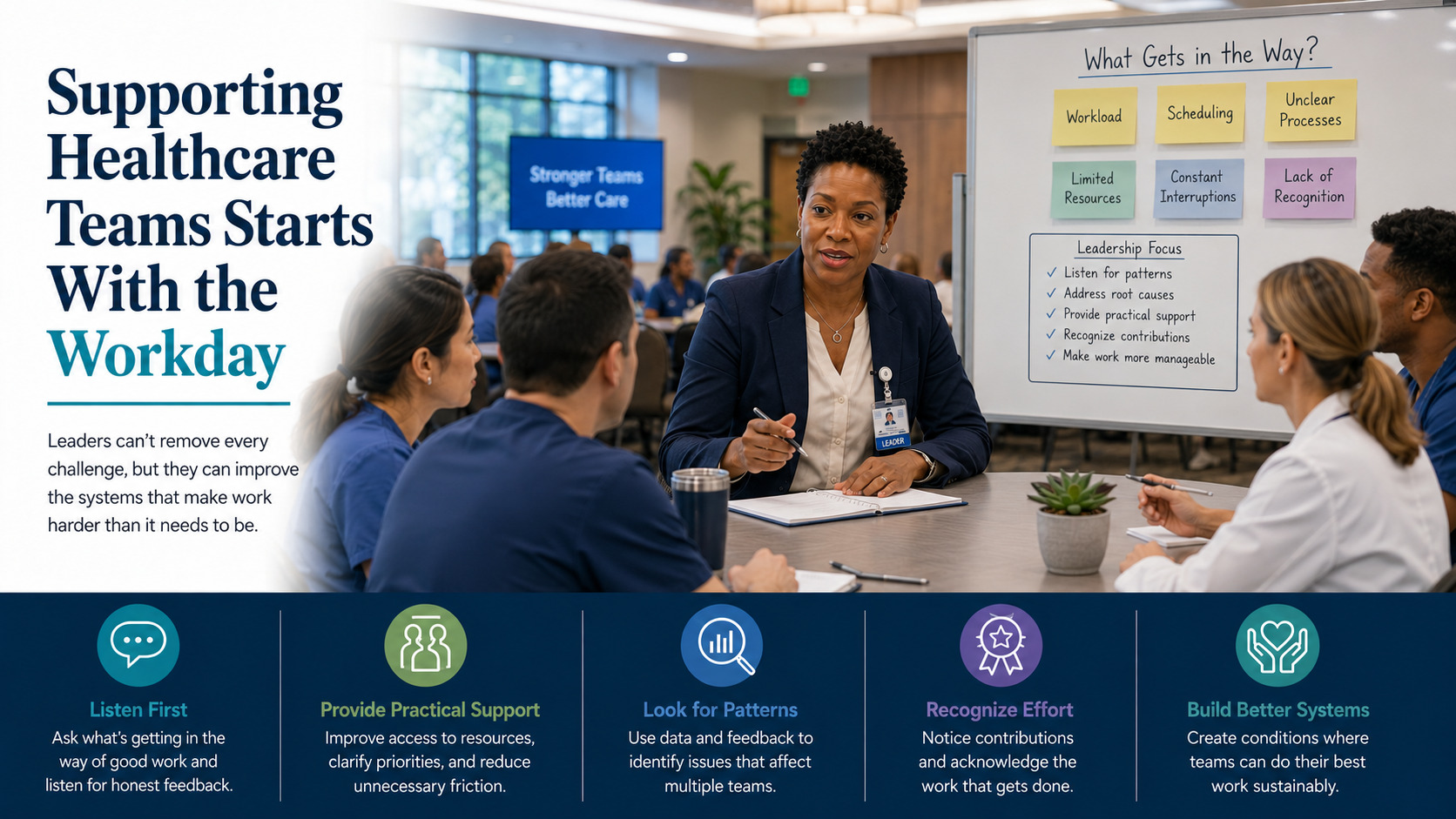
Healthcare work comes with pressure that cannot simply be removed from the job. Valerie Powell Stafford, FACHE, a board-certified healthcare executive whose career includes more than 25 years in hospital leadership and healthcare operations, understands that supporting healthcare teams requires attention to the conditions people experience throughout the workday. Heavy workloads, unclear processes, frequent interruptions, and limited resources can create strain that builds gradually rather than appearing all at once.
It is easy to approach well-being as something individuals manage on their own. But when frustration is rooted in how work is organized, personal strategies can address only part of the problem. Looking at the conditions surrounding the work can reveal pressures that may be difficult for individuals to resolve on their own.
Everyday Obstacles Can Add Up
A useful conversation can start with a straightforward question. What makes it harder for colleagues to do their jobs well? The answers may be surprisingly practical. A team might be spending too much time working around an inefficient process.
Technology could be adding steps instead of removing them. Priorities may compete with one another, or workloads may have grown without anyone stopping to reconsider how responsibilities are distributed. Listening for these details brings the discussion closer to what people actually encounter during a shift. It can also help distinguish an isolated frustration from a pattern that deserves broader attention.
Practical Support Belongs in the Workday
Support does not always require a new initiative. Sometimes it means giving people clearer priorities when several demands arrive at once. It may involve making a resource easier to access, simplifying a process, or giving colleagues a straightforward way to raise concerns.
Managers have an important role here. When people can talk openly about obstacles and see that those concerns receive thoughtful attention, feedback becomes part of everyday operations rather than something saved for an annual survey.
Recognition also matters. A demanding environment can make it easy to move immediately from one challenge to another without acknowledging the judgment, patience, and effort colleagues bring to their work.
Repeated Concerns Can Reveal Larger Problems
One difficult day does not necessarily point to an organizational problem. The same concern appearing repeatedly across different teams is harder to dismiss. Staffing trends, colleague feedback, turnover, and day-to-day operational observations can help leaders see where pressure is accumulating. The point is not to turn well-being into another set of numbers. It is to understand where changes to the work itself may be worth considering.
Valerie Powell Stafford, FACHE, observes that supporting healthcare teams requires a realistic view of the conditions people encounter throughout their workday. Healthcare may always carry significant responsibility and pressure, but unnecessary friction does not have to be treated as part of the job. Addressing recurring obstacles in workload, processes, resources, and communication can make workplace support more closely connected to what colleagues actually need.
Leave a Reply